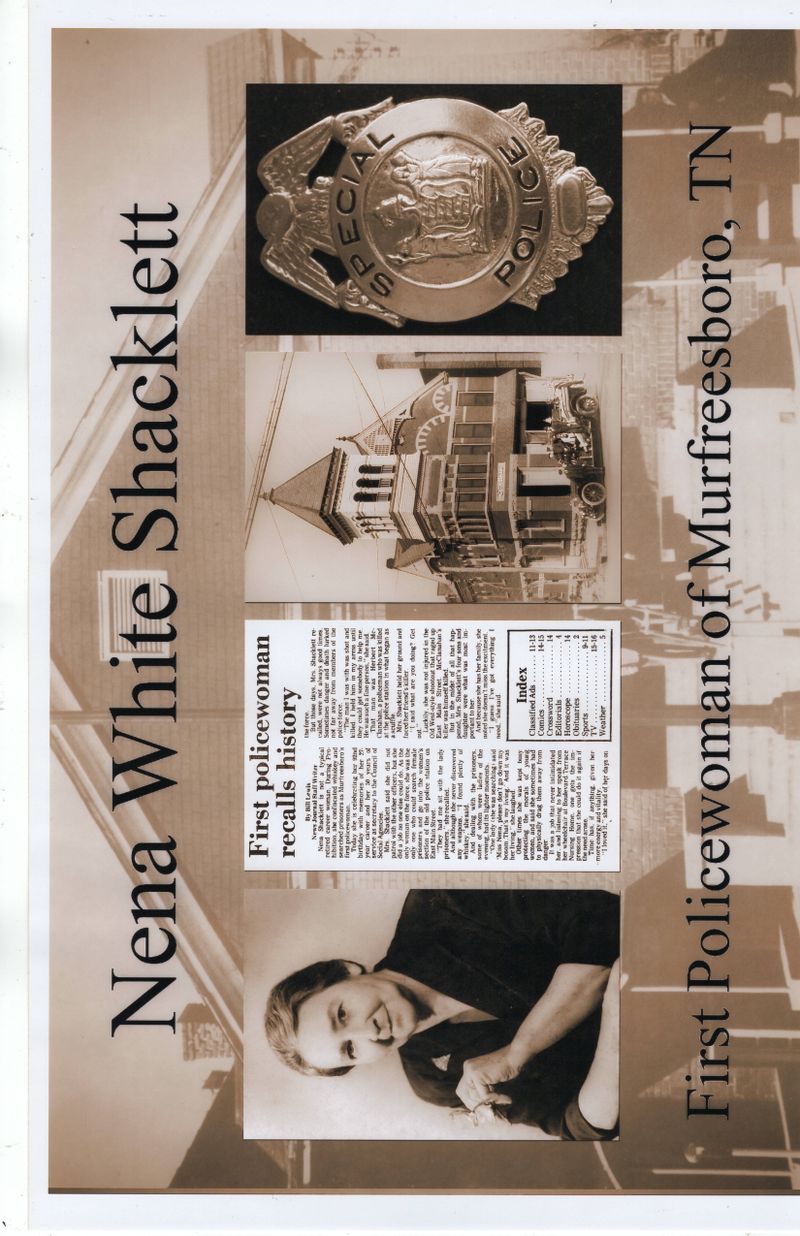
MURFREESBORO’S FIRST POLICEWOMAN: NENA WHITE SHACKLETT:
One of the most profound shifts in human history was the time from the late nineteenth century to the early twentieth century. In our community, including our nation with the rise in technology, we moved from a world that was fixed, mechanical, and predictable to dynamic societal change. Daily life itself was affected by innovations. Folks were drawn away from the farm to factories. This transformation threatening the integrity of the family was not only a societal shift in America but a reality here in Rutherford County.
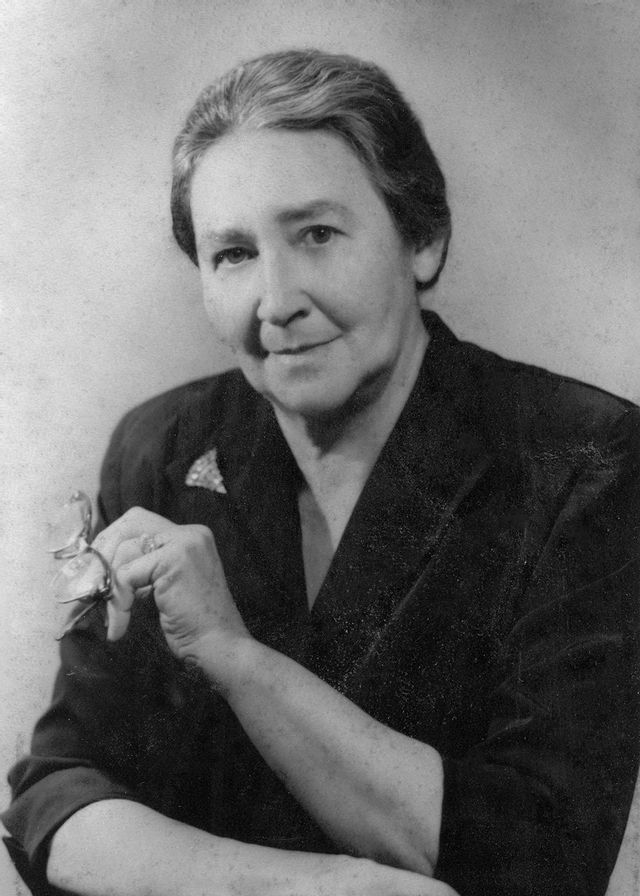
It was at that moment that a bright-eyed baby girl with raven hair was born to Ora and Thomas White in Milton, Tennessee. Nena White Shacklett was born in 1889 as America approached the 20 th century when the lives of women were changing. New prospects for education and employment offered them an opportunity to question these roles that society had demanded. Many courageous women led the way in the decades that followed to emancipate and define new roles for women. Unknowingly, Nena White Shacklett, was one of those women here in Rutherford County.
Nena demonstrated unwavering commitment to her education by selling paintings, preserving vegetables and fruit as a stipend to contribute toward tuition at Tennessee College for Women. Arthur Shacklett, a local businessman, was infatuated with this lady’s infectious smile who was determined to think for herself.
The two, Nena and Arthur, had found each other—the bride, a young woman in her early twenties, a recent graduate of Tennessee College for Women with a degree in music and the groom, a formidable up and coming Murfreesboro businessman, co-owner of Shacklett, Staley, and Sanders Dry Goods located on the North Side of the Square. Their union was a time like no other --marking their commitment to their relationship and new life together.
Their wedding celebrated the forming of a new family and from that union-- offspring, a new generation—John, a businessman, William, a doctor, Claude, a photographer, Sarah, businesswoman, and Bob, a pathologist. All of whom grew up in the harsh Depression years, but as her daughter, Sarah recalled, “There was not a day that they did not know for sure that each was loved.” It appears that mutual affection within the family fostered an environment where care and support could be extended to others. Nena Shacklett's dedication to her family and community was guided by her faith in God which included teaching Sunday School and playing the organ at Bethel Methodist Church.
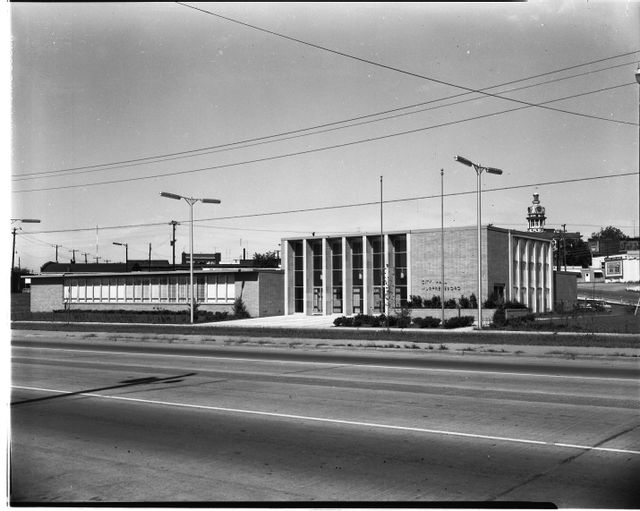
In the 1930’s through the 1950’s, she became a powerful force. In the 1930’s, Murfreesboro was known as “Little Chicago”. Our town became a refuge and respite for the gangsters on their way to Miami. Nena was hired as policewoman during prohibition. She was not your typical policeman. In dealing with the “ladies of the night” whom she often encountered, her family recalls stories where she would physically drag women out of danger who were being exploited.
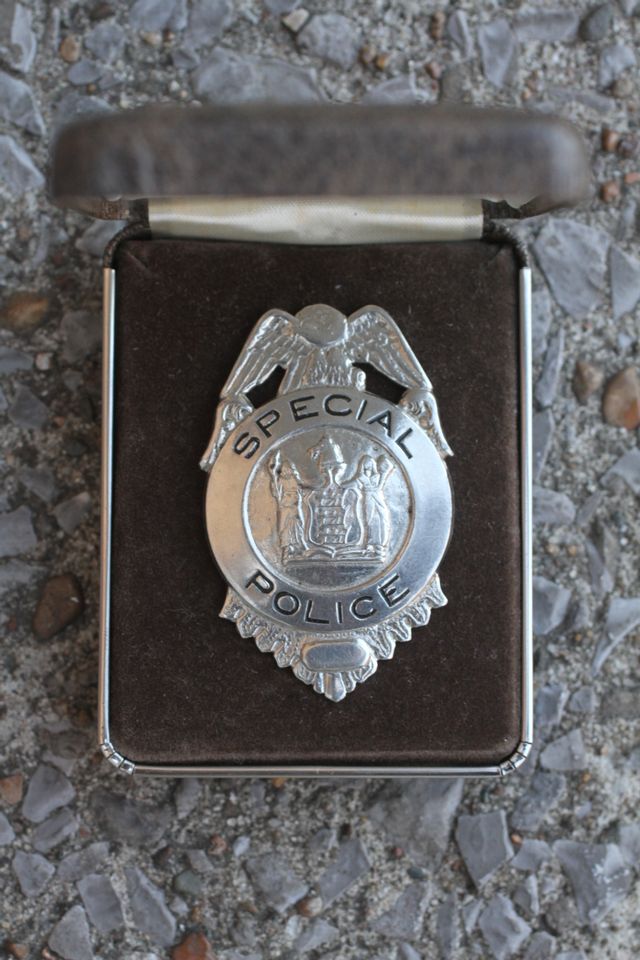
Nena once shared and remembered an episode where she felt led to protect one of those ladies who pleaded not to take her whiskey which was hidden in her dress, “Miss Nena, please don’t go down my bosom. That’s my living!” With no hesitation, Nena exclaimed, “I reached down in those bosoms and got that whiskey!” In the December 1946, danger lurked for Nena, recalling the incident in her own words, “The man I was with was shot and killed. I held him in my arms until they could get someone to help me.” The officer killed was Herbert McClanahan.
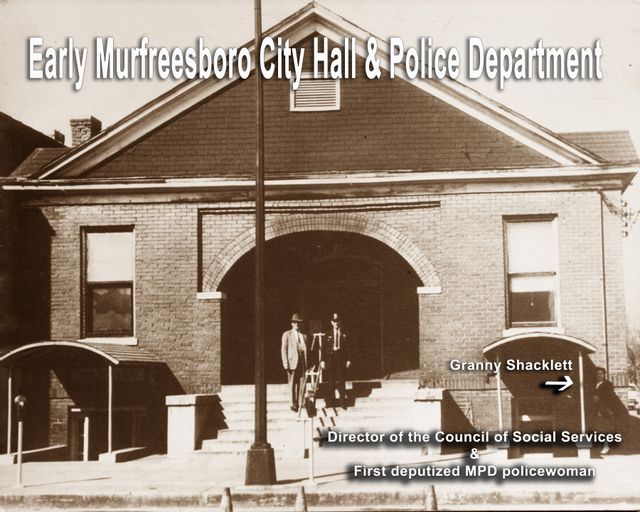
Nena Shacklett was never intimidated having grown up in a world where most women lived suppressed lives. The courage of this woman of excellence has left a silent and almost invisible legacy here in our community. While raising five children, she established a daycare to support women affected by their husbands' service in World War II. She played a key role in advocating for transitional housing for the homeless, as well as for students attending Middle Tennessee College and others facing life disruptions that required a coordinated community response, including assistance for those impacted by flooding in “The Bottom.” Many times, she and others used a borrowed truck to move their wet belongings to higher ground. These examples highlight her fifty years of service as secretary of the Council Social Agencies and her twenty-seven years as Murfreesboro’s first policewoman—contributions that are deeply valued by both her family and the community.
This article is written by Gloria Shacklett Christy,
Granddaughter of Nena White Shacklett

Help Main Street Murfreesboro end the year strong and fu... For 42 years, Main Street Murfreesboro has worked to strengthen our historic downtown, supporting building preservation through property...

Saturday Market Newsletter October 24 2026The Saturday Market offers fresh vegetables, fruits, and locally raised beef, lamb, and chicken. We have a variety of bakers and artisan...
: Main Street Murfreesboro to Host Town Hall on Proposed... Main Street Murfreesboro will host a public town hall meeting on Tuesday, October 27, from 6 to 7 p.m. at its office, 225 West College S...

Saturday Market Newsletter October 17, 2026The Saturday Market offers fresh vegetables, fruits, and locally raised beef, lamb, and chicken. We have a variety of bakers and artisan...

Trick or Treat around the Historic Rutherford County Square Read More
Oct 30, 2026
3:00 PM CDT
Public Square
Murfreesboro, TN 37130

Sip, Shop & Stroll Downtown After 5 Holiday EditionRead More
Nov 06, 2026
5:00 PM CST
225 West College Street
Murfreesboro, TN 37130